- When Was Photography Invented Year
- What Year Was Blackjack Invented
- What Year Was Scrabble Invented
- What Year Was Twister Invented
Cervantes set his story in the year 1569, which means blackjack’s Spanish ancestor was likely invented at some point in the 16 th century. 2 – Regional Variants Dating Back Even Earlier Are Found Everywhere. The stage was set. Thirty years would pass before the true birth of card counting. But in those thirty years, surely there were players who thought about the game and how to play it best. Many of them are referenced by those who came after them and explored the facets of the game after them.
US Players and Credit Card, BitCoin Deposits Accepted!
Black Jack Time Line

Derived from old French card games like 'Chemin de Fer' and 'French Ferme,' the game of blackjack made its first appearance in French casinos around 1700. In France, blackjack is called 'Vingt-et-Un,' which means 'Twenty-and-A.' The game garnered it's now-common name of 'blackjack' because when a player received a Jack of Spades and an Ace of Spades as the first two cards that were dealt to them, they would win an additional amount of money. Blackjack became popular in the United States around the 1800's and continues to be the most popular casino table game to date.
Influential Blackjack Book Timeline
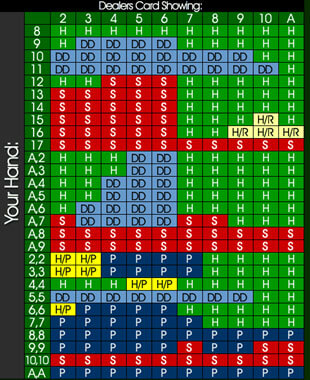
- The Optimum Strategy in Blackjack (1956)
- Beat The Dealer (1963)
- Professional Blackjack (1975)
Roger Baldwin
Roger Baldwin wrote a paper in 1956 titled The Optimum Strategy in Blackjack. The paper was published by the Journal of the American Statistical Association and helped changed blackjack history forever. This paper was the first of it's kind to apply mathematical theory to the game of blackjack. Baldwin used probability, statistics, and calculators to show methods of reducing the casino advantage in blackjack. The paper was approximately 10 pages long and mainly consisted of mathematics and how they applied to card games.
Professor Edward O. Thorp
In 1962, Professor Edward O. Thorp, who is often referred to as the 'Einstein of Blackjack', touched up the basic strategy that Baldwin had worked on and added the first known techniques of the now infamous tactics of card counting. Professor Throp published a famous book in 1963 called Beat the Dealer. The book was a national best seller. The casinos were affected so strongly by this book that they began to modify the game rules making it more difficult for players to win. Once again, the advantage had shifted back to the casino when they began changing the rules. It was during this time that casinos began introducing automatic card shuffling machines and multiple deck blackjack.
Stanford Wong
The next author to publish a famous book on blackjack was Stanford Wong, who wrote Professional Blackjack. This title used computer simulation to teach blackjack strategy and was designed for both beginning and advanced players. This book quickly became the standard blackjack bible for anyone who wanted to learn or master the game.
Julian Brown
Another large contributor to blackjack history was Julian Braun, a former IBM employee. Braun, a computer wizard, programmed thousands of lines of code for an IBM mainframe system, to simulate basic strategy. He developed new strategies for both basic strategy and card counting, which were published in the 2nd edition of Beat the Dealer.
Ken Uston
Electronic card counting devices were introduced in 1977 when Ken Uston's blackjack team built five pocket-sized computer devices that slid into their shoes. The team won over $100,000 in a short amout of time, as they assumed would happen, but eventually one of the computers was found and turned into the FBI. This computer device simply used public blackjack information, such as basic strategy, so the FBI ruled that it was not a cheating device. 60 Minutes, a popular news television show on CBS, aired an episode featuring Uston on their show in 1981 which lead to challenging casinos in Atlantic City on not allowing card counters to play. Ken Uston wrote a book called The Big Player which details all of his work in blackjack.
MIT Blackjack Team
In the early 1990's another famous card counting group called the MIT Blackjack Team formed, continuing in the tradition of basic strategy and counting techniques, but without any computerized assistance. This team won hundreds of thousands of dollars over a short amount of time. Eventually casinos caught the group of card counters and they were barred from casinos across the globe.
This is blackjack history in a nutshell. To this day, blackjack remains the most popular and heavily played table game offered by casinos.
See also:US Players and Credit Card, BitCoin Deposits Accepted!
Blackjack is a thinking gambler’s favorite, an oasis of skill and strategy amongst the desolate desert offered by pure games of chance.
If spinning reels and watching their random revolution decide your fate offends your gambling sensibilities, you probably prefer to mix it up by playing blackjack. As one of the most popular card games ever created, blackjack has been a gambling hall staple since well before the first casinos were constructed during Nevada’s territorial days.
From dusty saloons in the Old West to royal courts in the castles of European antiquity, blackjack and its predecessors have been played continuously over four centuries and counting.
That’s just one of the fun facts about blackjack, so check out the list below to find six more.
When Was Photography Invented Year
1 – Blackjack Was First Described by the Author of “Don Quixote”
You probably know 17th century Spanish author Miguel de Cervantes as the mastermind behind “Don Quixote” (1605), a novel that set the standard for European literature of the era.
But a few years before Cervantes penned his masterpiece, he wrote a short story titled “Rinconete y Cortadillo,” which told the tale of two gamblers residing in the city of Seville. The title characters form a team of card game cheats, and their preferred game just so happens to be called ventiuna — which is Spanish for “twenty-one.”
Based on Cervantes’ typically florid descriptions, ventiuna is a card game in which aces hold a variable value of either 1 or 11, and the objective is to reach a total of 21 or close to it without going over.
Sound familiar?
Cervantes set his story in the year 1569, which means blackjack’s Spanish ancestor was likely invented at some point in the 16th century.
2 – Regional Variants Dating Back Even Earlier Are Found Everywhere
At the same time Spanish gamblers were enjoying games of ventiuna, their counterparts in France played vingt-et-un — which translates to “twenty-one.”
Italy was home to sette e mezzo — Italian for “seven and a half” — a hybrid form of early blackjack which used a modified 40-card deck. When playing sette e mezzo, the cards ace through 7 hold their numerical rank (1-7), while face cards are valued at one-half a point.
During the waves of European immigration to the New World that eventually produced America as we know it today, gamblers brought their favorite card games across the Atlantic.
Upon settling and spreading across the North American continent, these players and their progeny cobbled their regional games together until the template for modern blackjack was born.
3 – The First American Blackjack Games Paid 10 to 1 Jackpots
If you’ve ever wondered where the modern name “blackjack” originated, look no further than the deck’s jack of spades and jack of clubs.
This low-level royal pair provided the first casinos in Nevada with the perfect opportunity to promote their newfangled European card game. In an era when most card sharps preferred the mano a mano combat of the poker table, saloon owners and gambling hall operators had their work cut out for them when it came to convincing skeptical crowds to bet on blackjack.
Appealing to every gambler’s most precious commodity, their bottom line, early blackjack purveyors came up with an elegant promotion. Whenever the player looked down to find the ace of spades paired with either the jack of spades or jack of clubs, they’d earn an instant 10 to 1 payout.
This provision obviously caused the card playing community to prioritize landing the deck’s two black jacks, and the rest, as they say, is history.
Once the gambling masses became acquainted with blackjack gameplay, operators slowly phased out the 10 to 1 payout and replaced it with a far more house-favorable flat rate of 3 to 2 on any ace + 10-value combination.
4 – Blackjack’s First Written Strategy Analysis Was Produced by the “Four Horsemen”
In 1953, looking to kill time during their downtime on base while serving in the U.S. Army, four soldiers decided to play some cards. The game was dealer’s choice poker, but when somebody asked to make the game blackjack, the caveat that an appointed dealer must hit on 16 and stand on 17 got the group thinking.
What Year Was Blackjack Invented
As it turned out, the four players — Roger Baldwin, Wilbert Cantey, Herbert Maisel, and James McDermott — had more in common than their interest in blackjack. All four were college-educated mathematics majors holding Masters degrees from prestigious universities. Blessed with inquisitive minds, upper-level math skills, and the most advanced adding machines of their era, the foursome set out to determine the most mathematically sound optimal strategy for blackjack.
The analysis took two years of intense number crunching, but in 1956, their paper “The Optimum Strategy in Blackjack” was published as part of the Journal of the American Statistical Association.
What Year Was Scrabble Invented
Known today as the “Four Horsemen of Aberdeen” — after the city where their Army base was located — Baldwin, Cantey, Maisel, and McDermott were inducted into the Blackjack Hall of Fame as a group in 2008.
5 – This Classic Card Game Has Its Equivalent of Cooperstown
Yep, you read that last bit correctly. Blackjack has its own Hall of Fame.
The shrine to 21 is located inside the Barona Casino in San Diego, California, and it was founded in 2002. That year, 21 undisputed blackjack experts assembled to nominate the inaugural class, which included such luminaries as card counting originator and “Beat the Dealer” author Edward O. Thorp and acclaimed strategy analyst Stanford Wong.
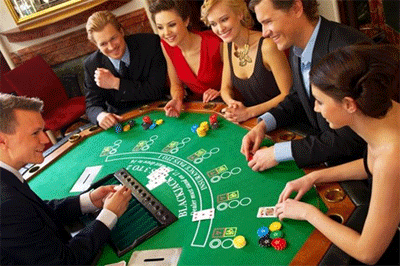
Every year since, the game’s greatest players and theorists come together at the “Blackjack Ball,” a combination party and nominating committee that celebrates blackjack’s greatest accomplishments.
To see how the full list of Blackjack Hall of Fame inductees stacks up, check out the list of legends below.
| 2002 |
Edward O. Thorp, Ken Uston, Stanford Wong |
| 2004 |
|
| 2005 |
|
| 2006 |
|
| 2007 |
|
| 2008 |
|
| 2009 |
|
| 2010 |
|
| 2011 |
|
| 2012 |
|
| 2014 |
|
| 2015 |
|
| 2016 |
|
| 2017 |
|
| 2018 |
|
| 2019 |
|
6 – A Hall of Famer Took Atlantic City Casinos for $15 Million in Just Five Months
In a five-month stretch spanning December 2010 and April 2011, a New Jersey advantage player named Don Johnson lived every blackjack enthusiast’s dream.
Armed with an eight-figure bankroll and the confidence of a true high-roller, Johnson arranged favorable deals with a trio of Atlantic City casinos. In exchange for Johnson betting $100,000 per hand, head honchos at the Borgata, Tropicana, and Caesars offered the whale “discounts” on his losses of up to 20%.
What Year Was Twister Invented
Playing under these player-friendly conditions, Johnson proceeded to clean the house’s clock, winning $6 million at the Tropicana, $5 million more from the Borgata, and another $4 million playing at Caesars, prompting all three venues to quit the game by declining to offer discounts.
Conclusion
For a game that only takes a few minutes to learn, blackjack sure does offer a lifetime’s worth of enjoyment and exploration. Learning the vagaries of house rule variations and deciphering the latest side bets ensures players can never rest on their laurels.
But while you continue your blackjack studies, don’t forget to find a little time to savor the game’s long history — and the many fun facts found buried within several centuries of play by gamblers all over the planet.